


Strategic Energy Reserves
The Value and Risks of Diesel Assets in Underground Storage Tanks and the Modern Management Transition Toward Low-Carbon, Green Energy

Amid global geopolitical turmoil, supply chain instability, and the ongoing energy transition, diesel has evolved from a mere fuel into a high-value strategic asset for businesses.For engineers responsible for critical facilities—such as data centers, hospitals, and 24/7 operations—ensuring that diesel stored in underground tanks maintains exceptional quality even when “idle” and facilitating an early transition to green energy have become among the most pressing challenges.

Diesel: From a Consumable to a High-Value Strategic Resource
Assetization and Market Scarcity
Rising production costs for ultra-low-sulfur diesel (ULSD), combined with strict carbon emission limits, have caused market prices for high-quality diesel to continue climbing. In extreme situations—such as war, natural disasters, or a power grid collapse—diesel scarcity increases exponentially; the question is no longer “how much per liter,” but “is there any fuel available?”
Under corporate crisis management, strategic diesel reserves have become a crucial component of business continuity planning!

Supply Chain Vulnerabilities
Modern supply chains rely on just-in-time delivery; in the event of an unplanned power outage, demand for diesel in the surrounding areas skyrockets instantly, causing logistics disruptions.The tens of thousands of liters of diesel stored in underground tanks are, in fact, the facility’s only emergency “life insurance.” Treating this as an asset rather than a miscellaneous expense represents a shift in mindset in modern facility management.
Strategic Resource Allocation During Unplanned Power Outages
Scarce diesel resources must meet three key strategic criteria: immediate availability ( providing a stable calorific value within seconds), sustained supply (where fuel purity directly affects the generator’s service life), and resource priority (where fuel quality determines maintenance frequency and spare parts consumption).
Four Major Concerns Regarding Underground Storage Tanks (USTs)
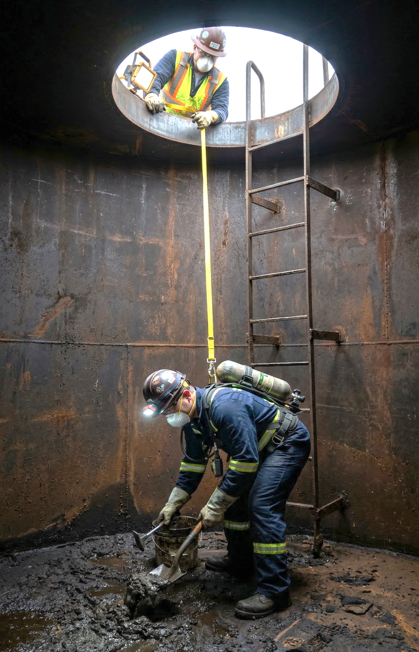
Although underground storage tanks save space and offer fire safety, they provide an extremely harsh environment for diesel fuel that remains unused for long periods.

Four Modern Approaches to Ensuring Fuel Safety
Automated Fuel Optimization System
Periodically drain the oil from the bottom of the oil tank; after undergoing multi-stage filtration, coalescence and separation (to remove free water), and sterilization, the oil is recirculated to ensure it remains in a “Clear & Bright” state at all times.
Condition Monitoring and Predictive Maintenance
Samples from the bottom, middle, and top are collected quarterly and sent to a laboratory for testing of oxidative stability (ASTM D2274) and moisture content; moisture sensors and automatic oil level meters are installed for real-time monitoring.
Chemical Intervention: Additive Management
Add antioxidants (to slow chemical degradation), biocides ( to inhibit microbial growth ), and water dispersants (to prevent biological growth) to idle fuel.
Strategic Oil Replacement and Blending
Conduct regular generator test runs (Exercises) to use up old fuel and refill with new fuel. Implement a “fuel rotation system” to ensure that the average storage time of fuel in the tanks does not exceed its stability period.
Comparison of Three Major Fuel Types: ULSD, B5, and R20
For long-term storage scenarios involving underground hydraulic cylinders, the following compares the key performance differences among three major fuel types when switching from standard ultra-low-sulfur diesel to low-carbon green energy.

✅ Top Choice: R20 (20% HVO)
HVO components are oxygen-free and extremely stable, making them the optimal technical solution for preventing “generator startup failures.”
⚠️ Avoid B5 or Manage It Strictly
If B5 must be used, it must be accompanied by high-frequency automatic recirculating filtration; otherwise, the risk of biological contamination will increase exponentially after six months.
🔍 ULSD Still Needs To Be Monitored
Since it lacks sulfur’s natural antibacterial properties, it must be used in conjunction with a professional disinfectant and a drying process to ensure safe use.
CONCLUSION : Every Drop Of Diesel Is Our Last Line Of Defense
In 2026, as energy supplies grow increasingly tight, every drop of diesel fuel in the hands of facility engineers is the last line of defense for facility safety.
Shifting from traditional, passive “let it be” management to a strategic asset management model centered on renewable fuel and supported by an automated filtration system is the only way to ensure that the heart of the power system can resume beating instantly in the event of any unexpected power outage.
A Shift in Mindset: View diesel as a high-value strategic asset rather than a miscellaneous expense.
Technology Upgrade: Deployment of an automated fuel optimization system and real-time sensor monitoring.
Fuel Optimization: Prioritize the use of R20 (20% HVO) to fundamentally improve storage stability and starting reliability.
